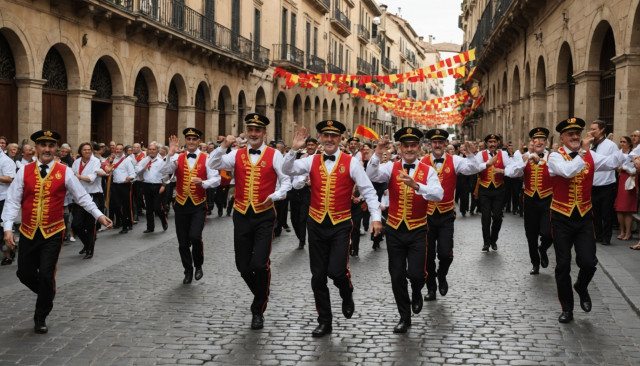
With the arrival of spring, the fields of the Iberian Peninsula burst into vibrant colors, and the air fills with a renewed fragrance. This transformation of nature not only marks a change in the weather but also ushers in one of the oldest and most deeply rooted festivals in our culture: the May Festival. This celebration, which takes place primarily during the transition from April to May, is a hymn to life, to the fertility of the land, and to rebirth after the winter slumber. In Spain, the May Festival is celebrated in very diverse ways depending on the region, but all share a common spirit of joy and community.
The importance of understanding these traditions lies in their ability to connect us with our roots. As the seasons change in Spain , the calendar fills with events that explain who we are. The May Day Festival is perhaps the ultimate expression of spring folklore, combining pagan elements with religious adaptations that have survived the centuries, keeping alive the essence of Spanish culture.
What is the Fiesta de los Mayos and why is it celebrated in Spain?
The Fiesta de los Mayos is a traditional festival that celebrates the splendor of spring and the beginning of the agricultural cycle. Its name comes from the month of May, which in turn owes its name to the Roman goddess Maia, protector of fertility and nature. In Spain, this celebration is expressed through songs, dances, floral decorations, and the placement of symbolic elements such as the 'Mayo' (a tall, slender tree trunk).
The fundamental purpose of this festival has historically been to ensure a good harvest and celebrate the end of winter. It is a time when the community gathers to celebrate the earth's renewed bounty. Furthermore, in many parts of Spain, the May celebrations have a strong social and romantic component, providing the perfect occasion for serenades, where young men sing verses to the women of the village to express their interest or admiration.
Historical origin of the May celebrations
To understand why we celebrate May, we must go back to antiquity. Its roots lie in the rites of civilizations such as the Phoenician and Greek, although it was the Romans who consolidated the festival through the 'Floralia'. These celebrations were held in honor of Flora, the goddess of flowers, between the end of April and the beginning of May, and included games, dances, and offerings of plants.
With the arrival of Christianity, many of these pagan practices were assimilated by the Church. The exaltation of nature and fertility became linked to the figure of the Virgin Mary, making May the 'month of flowers' and the 'month of Mary'. However, in rural Spain, original elements such as the Maypole and serenades remained almost intact, merging into a unique cultural blend that has survived to this day.
How the May Festival is celebrated in the different autonomous communities
Spain is a country of contrasts, and the May Day celebrations perfectly reflect this diversity. Although the underlying theme remains the same, the way they are celebrated in Galicia, Castile-La Mancha, and Madrid varies significantly, contributing immeasurable folkloric richness.
The May celebrations in Castilla-La Mancha: the cradle of tradition
In La Mancha, the May celebrations are synonymous with music and devotion. Towns like Pedro Muñoz, in Ciudad Real, have been declared of National Tourist Interest due to the scale of their festivities. Here, the night of April 30th to May 1st is magical. Folk groups and locals take to the streets to sing the May song to the Virgin Mary and then to the "Mayas," the young women chosen to represent the beauty of spring.
The May song of La Mancha is a complex and beautiful musical piece, with verses that poetically describe the anatomy of a woman or the Virgin Mary. It is common for the hosts to offer the serenaders traditional sweets and zurra (a type of sangria) after the songs, creating a convivial atmosphere that lasts until dawn.
Galicia and the Festa dos Maios: plant art
In the northwest of the Iberian Peninsula, especially in Ourense and Pontevedra, the festival takes on a more visual and artistic character. The Galician 'Maios' are not tree trunks, but conical or pyramidal structures covered in moss, flowers, ferns, and fennel. These plant sculptures are true works of art displayed in the main squares.
Around these structures, children and young people sing 'coplas,' satirical verses that review the year's social and political events, accompanied by the rhythm of two sticks clashing together. It is a celebration where popular wit and nature come together under the Galician sky.
Madrid and the Maya of Lavapiés
In the capital, the tradition centers on the figure of 'La Maya'. On May 2nd, coinciding with Madrid Community Day , the Lavapiés neighborhood is adorned for this celebration. A young girl, chosen as Maya, sits on an altar lavishly decorated with flowers and rich fabrics, remaining serious and still while her companions ask for 'a little room for La Maya'.
This Madrid tradition, which appears even in chronicles from past centuries and in works by authors like Lope de Vega, is one of the city's most picturesque. It represents the purity and blossoming of life, and is an event that attracts thousands of tourists and locals every year.
Region of Murcia: the Mayos of Alhama
In Alhama de Murcia, the festival takes on a theatrical character. The 'Mayos' here are effigies or rag dolls dressed in old-fashioned clothes that are placed at the doors of houses and in the town squares. These dolls represent scenes from everyday life, often with a touch of social commentary or humor.
The 'Corremayos' are the central figures: young people dressed in harlequin costumes adorned with bells who roam the town entertaining the crowds with music and dancing. It's an explosion of color and sound that makes this town in Murcia a must-see destination during this time of year.
When is the May Festival 2026: dates and calendar
If you're planning to attend these events, it's essential to know the key dates. In 2026, the Fiesta de los Mayos follows the traditional calendar, concentrating its main events between the end of April and the first days of May. While you can consult the May calendar from previous years to see the pattern, here are the most important dates for this year:
- The night of April 30th to May 1st: It's the 'Night of the May Songs'. In most towns in Castilla-La Mancha, Madrid, and Aragon, this is when the initial serenades and songs take place.
- May 1st: Central day in many localities, with the exhibition of the Mayos (dolls or structures) and folk parades.
- First Sunday of May: In places like Ourense or Madrid (Lavapiés), the main celebrations are moved to Sunday to facilitate citizen participation.
It is advisable to check the specific programs of each town hall, as in some areas the festivities may extend throughout the first week of May, coinciding with local fairs or medieval markets.
Typical elements: the May tree, the Maypoles, and the songs
To understand the depth of this festival, we must analyze its most representative symbols. Each one holds an ancestral meaning that has endured despite the modernization of Spanish society.
The Maypole is perhaps the most universal symbol. It is a tall trunk, usually pine or poplar, which the young men of the village (the 'quintos') cut, peel, and transport to the main square. There it is 'pinned' or raised, sometimes decorated with colorful ribbons or prizes in its crown. It represents the axis of the world and the union between earth and sky.
The Maya are the human representation of spring. They are usually depicted as girls or young women dressed in white dresses, flower crowns, and Manila shawls. Their presence on the flower altars symbolizes the fertility expected for the new agricultural cycle.
Finally, the May Songs are the heart of the festival. These are compositions that have been passed down orally from generation to generation. They blend verses praising the Virgin Mary with love songs and, sometimes, playful stanzas used for courtship between the young men and women of the town.
Best places to enjoy the May Festival in Spain
If you want to experience this firsthand in 2026, these are the top destinations you should consider for your itinerary:
| Locality | Province / Autonomous Community | Outstanding |
|---|---|---|
| Pedro Muñoz | Ciudad Real | Song of the Mayos and Folklore Festival. |
| Alhama de Murcia | Murcia | The Corremayos and the satirical puppets. |
| Ourense | Galicia | Contest of vegetable Maypoles and couplets. |
| Lavapiés (Madrid) | Madrid | The Maya women on their floral altars. |
| Albarracín | Teruel | Night patrols in a medieval setting. |
Each of these places offers a unique perspective. While in Albarracín the silence of the night is broken by deep voices and guitars in a stone setting, in Alhama de Murcia the hustle and bustle and the clanging of bells dominate the scene. The choice will depend on whether you are looking for a more spiritual and traditional experience or a festive and crowded celebration.
Cultural and social significance of the Mayo people today
In the 21st century, it might seem that a festival based on agricultural cycles and fertility rites has lost its meaning. Nothing could be further from the truth. The May Day celebrations in Spain are experiencing a revitalization. For many villages, they are a vital tool in the fight against depopulation, attracting visitors and encouraging young people who have migrated to the cities to return to their roots for a few days.
Furthermore, the festival has evolved to include modern concerns. Galician folk songs, for example, are now a highly valued platform for social commentary. The preservation of regional costumes, traditional instruments like the bandurria and the bagpipes, and the gastronomy associated with this time of year make the Mayos a bastion of Spanish cultural identity in the face of globalization.
Participating in the May celebrations is, ultimately, celebrating life. It's a reminder that, after every winter, however harsh, the flower always blooms again. It's an invitation to take to the streets, to share with neighbors, and to enjoy the richness of a country that knows how to honor its past while looking toward the future.